
Introduction
E-business is changing at a very high pace. The term AI E-commerce Automation is no longer a buzzword in the future, as of 2025; it is a business requirement. Not only beginning with a small online store but even having your own store in mind.
The introduction of artificial intelligence in your company can help to save time and boost the level of sales, not to mention outshining the competitors. Nevertheless, what happens when you are new to AI and e-commerce? This all-encompassing assistant breaks down all that you need to know into tiny but easy-to-read bites.
The importance of AI E-commerce Automation
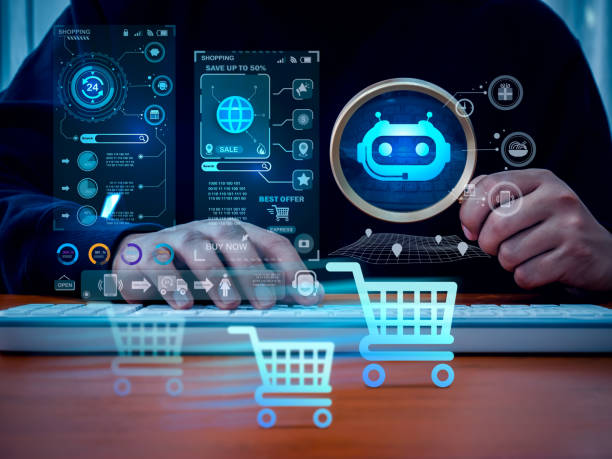
It is an exciting and daunting task to run an e-commerce shop. You must manage the stock, customer care, product promotion, and monitor the competition- all at the same time. Here, AI E-commerce Automation is involved.
As AI replaces manual work on repetitive tasks and applies smart algorithms in the process of making data-driven decisions, you will not work harder but will be smarter when using AI in online shops.
These innovations do not require having a computer science degree in order to use them. We will explore the concept of AI ecommerce automation, the reasons why it proves to be useful, and how it can be used by beginners.
Key Areas Where AI E-commerce Automation Can Help
| Area | AI Automation Example | Benefits for Beginners |
|---|---|---|
| Customer Service | AI chatbots and virtual assistants | Faster responses, lower workload |
| Inventory Management | Automated stock tracking and demand forecasting | Avoid stockouts, reduce overstock |
| Marketing & Personalization | Product recommendations, automated email campaigns | More sales, happier customers |
| Pricing | Dynamic price adjustments based on market data | Stay competitive, maximize profit |
| Order Fulfillment | Automated shipping updates and tracking | Fewer errors, better experience |
| Fraud Detection | AI-powered risk analysis | Prevent chargebacks, protect store |
What Is AI E-commerce Automation?
AI ecommerce automation is a set of artificial intelligence systems, such as machine learning and natural language processing, that can be used to automate processes within your online shop that otherwise would be carried out by people.
They might consist of answering simple questions of the customer, sales data processing, and predicting subsequent products that will be popular in the next month.
This means putting systems in place that do not need you to run. AI, combined with automation, will be even more intelligent: AI will be able to learn data, improve over time, predict and act according to regulations.
Why Should Beginners Care About AI E-commerce Automation?
Being a beginner, you will be left wondering whether it is the big businesses that can automate AI. The point is that the existing tools are oriented to stores of any size. Here’s why you should care:
- Time savings: Automate business processes and concentrate on business expansion.
- Enhance customer satisfaction: 24-hour fast and personalized service.
- Sell more: More intelligent advertisements and the right price, with the assistance of AI.
- Reduction of errors: Process orders and order checks
- and inventory: use AI to enter data.
- Outsell larger brands: Enter technology through to the large players.
Understanding the work of AI E-commerce Automation
1. Machine Learning
Machine learning is a kind of AI that discovers patterns of data. In e-commerce, it can be used to make predictions to know which products will sell, which customers will most probably buy, or even when inventory should be reordered.
2. The Natural Language Processing (NLP)
NLP helps computers to comprehend and react to human language. NLP is applied in ecommerce chatbots to respond to customer queries or assist the shopper with product search.
3. Predictive Analytics
AI takes into consideration information about your store, such as previous purchases, past browsing history, and seasonal changes to predict what is needed, what you should buy, or even to tell you that something is wrong.
AI E-commerce Automation Implementation
Step 1: Selecting the appropriate E-commerce Platform.
Not every e-commerce platform is as well-integrated as AI. Shopping platforms such as Shopify, BigCommerce, and WooCommerce have extensive support of AI automation applications and tools. Ensure that your platform has a problem-free interface with AI-driven applications or services.
Step 2: Find some tasks to automate at first.
Being a novice, pay attention to the aspects that will help you save most of your time or have the greatest impact. Usual starting points are:
- Automating customer service using chatbot.
- Product recommendations based on AI.
- Establishing automated email marketing.
Step 3: Choose Easy-to-Use AI
Locate applications that are user friendly and those that contain much guidance. There are a lot of apps that have easy installations and low integration. Some top choices are:
- Zendesk or Intercom chatbots, or Tidio.
- Omnisend to email marketing Klaviyo AI.
- Prisync for dynamic pricing
- Demand Forecasting Inventory Planner.
Step 4: Customize and Open Your Tools.
Most AI ecommerce automation systems are ready-to-use. Set-up guidelines can be followed in just several minutes and integrated with your store and modify the simplest settings (e.g. what voice chatbots should speak with, or what products to advertise in the list of recommended ones).
Step 5: Monitor and Optimize
Artificial intelligence gets better with use as it gets your information. Periodically analyze performance dashboards, test new features and adjust settings to get the best results.
- Best AI tools to use as an e-commerce beginner.
- Purpose Tool Example Features Easy to set up?
- Chatbots & Support Tidio, Zendesk 24/7 chat, FAQ automation Easy.
- Email Marketing Klaviyo, Omnisend AI segmentation, automated campaigns Easy.
- Personalized recommendations Easy Product Recommendations Recom.ai, Nosto
- Inventory and Demand Inventory Planner Forecasting, reorder reminders Moderate.
- Pricing Automation Prisync, Dynamic Pricing Real-time price changes Moderate.
Real-Life Applications: AI Ecommerce Automation in Practice
Automated Customer Service
Consider that a customer comes to your store one evening at midnight and has a query. Rather than respond, an AI chatbot responds immediately, suggests goods, and even takes orders, which increases customer satisfaction and sets you free.
Personalized Recommendations
AI uses the browsing or purchase history of customers and recommends other products they will adore. This improves your average order and ensures that the shoppers will return.
More intelligent Inventory Control.
Rather than checking the stock daily, AI applications track the sales trends and raise alerts when it would be time to order more stock–this way you would not run out of stock nor will you end up with lots of unused stock.
Popular Myths of AI E-commerce Automation.
Myth 1: AI is too complex to be known to novices.
The current AI products are easy to use and have simple interfaces and stepwise instructions to enable non-technical users.
Myth 2: “It’s too expensive.”
A variety of AI ecommerce robots include free plans or low-priced monthly plans, which are affordable to small companies.
Myth 3: “With automation the personal touch will be removed.
However, in the real sense, AI liberates you to get down to the business of establishing authentic customer relationships and in special instances that require a human touch.
Tips for Success with AI E-commerce Automation

- Start small: Automate one process at a time to avoid overwhelm.
- Stay informed: Keep up with new tools and best practices—AI evolves quickly!
- Measure results: Use analytics to track how automation is impacting your business.
- Ask for feedback: Regularly check in with customers to ensure their experience is positive.
- Don’t be afraid to experiment: Try new features and see what works best for your store.
Frequently Asked Questions
Do I need coding skills to use AI ecommerce automation tools?
No! The majority of ecommerce AI tools do not need any code and have easy installation.
Will AI automation deprive my employees?
The repetitive tasks are those that can be best tackled through AI so that you and your team can work on growth, creative work, and customer relationships.
What is the cost of starting it?
The majority of the tools have a free trial or low prices. It can be as simple as automating as little as $2050/month according to your requirements.
Will AI automation apply to any form of online store?
Yes! AI tools can be used to facilitate streamlining of operations and enhancing customer experience, regardless of whether you are selling physical goods, digital products or services.
Conclusion
Entering the realm of AI ecommerce automation may seem very frightening, but it is simpler and more enjoyable than ever, and even more so to the novice ecommerce user. Through automating your customer service, marketing, and inventory, among others, you will have time and energy to concentrate on what is really important: creating your brand and reaching out to customers.
It will be the best moment to begin with user-friendly tools, cheap deals, and a lot of support offered. Waiting to be surpassed by the competition is pointless. Accept AI ecommerce automation now and position your online business to succeed over time!