
Introduction
In the modern digitized world, information is ubiquitous. Each move of the mouse, finger, and by leaves a bit of data. However, with such a volume of information that is being gathered, how do businesses make sense of it?
Enter AI data analysis- A game-changing tool that applies artificial intelligence to unlock the ability to gain powerful business insights, make smarter decisions, and create a competitive advantage for organizations of any size.
In case you are wondering how AI-based analytics is transforming business intelligence in 2025 and beyond, this guide will simplify it for you in easy and interesting language. You will realize at the end how AI can help convert raw data into growth strategies.
What is AI Data Analysis?

AI data analysis can be described as the process of analyzing large amounts of data with the help of sophisticated algorithms and machine learning tools so that meaningful patterns can be detected and insights can be formed automatically.
Contrary to the more traditional forms of analytics that can be slow, manual, and subject to human factors, AI-based analysis processes are faster than lightning and can process complex and unstructured data.
The artificial intelligence can go further and reveal the relationships and trends that even the most skilled analysts could not notice.
How AI Data Analysis Works
In essence, AI data analysis involves machine learning, natural language processing, predictive analytics, and data mining as a combination of applying these algorithms to process information. The steps usually begin with raw data, which can be the customer transactions, web logs, social media posts, sensor data, or any other digital footprint that is purified and sorted into order with AI algorithms eliminating errors or discrepancies.
After that, the AI system seeks trends, anomalies, and correlations using pattern recognition and statistical modeling. With time, machine learning models will become smarter, and they will learn new information and can make a prediction with more accuracy.
In contrast to rule-based systems, AI data analysis can be updated as the needs of the business change. It can predict sales, categorize customers, or identify fraud, AI provides a scalable, generalized approach to the ever-changing data problems of the modern day.
Traditional Data Analysis vs AI Data Analysis
| Feature | Traditional Data Analysis | AI Data Analysis |
|---|---|---|
| Speed | Manual, time-consuming | Automated, real-time |
| Data Volume | Limited by human capacity | Handles massive datasets |
| Error Risk | Higher (human mistakes) | Lower (algorithmic consistency) |
| Pattern Detection | Surface-level trends | Deep, complex relationships |
| Adaptability | Static, rule-based | Learns and evolves over time |
| Predictive Power | Limited forecasting | Advanced, dynamic predictions |
Key Benefits of AI Data Analysis for Businesses
The benefits of AI data analysis offer an assortment of opportunities that enable companies to remain dynamic and competitive. One of the most important advantages is faster decision-making. Another benefit is increased precision because with real-time analytics, managers are able to react to changes in the market immediately, as opposed to waiting days to receive reports.
Alienating any human bias and error, AI provides more credible results. Another win is that machine learning models are able to identify minor trends and outliers, which in turn enables businesses to realize new growth opportunities or emergent risks before they grow into issues.
The scale of analyzing customer behavior is available, which allows companies to customize products, marketing, and experiences of service experiences to personal preferences through AI, and cost savings can also be noteworthy.
By automating the data analysis, many analytics teams will not be required or manual reporting, which will allow resources to be diverted to more strategic matters.
Practical Uses of AI Data Analysis
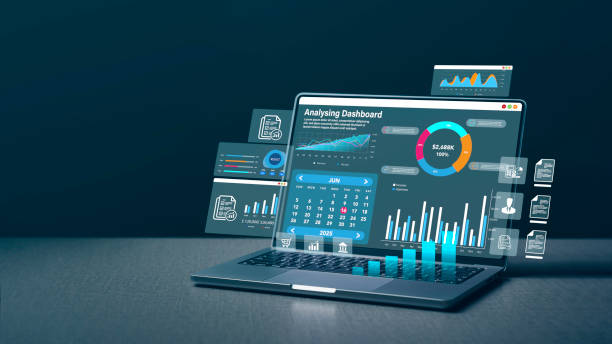
The use of AI data analysis in solving unique challenges and boosting performance can be seen in businesses in all industries. In retail, AI can use previous purchases and browsing behavior to suggest customized products, price optimization, and predict stock demand.
Analytics based on AI should process medical histories, find at-risk patients, and simplify diagnosis in healthcare. Financial institutions are using AI to identify fraud, credit risk, and automate compliance inspections. Manufacturers are using AI data analysis to conduct predictive maintenance, do sensor data analytics on machines to prevent failures, and schedule production.
Another area that AI has revolutionized in marketing is the segmentation of audiences, refining of messages, and real-time tracking of campaign effectiveness. Chatbots are data-driven with the ability to support routine questions, solve problems, and even anticipate the needs of customers using previous interactions.
The AI Data Analysis Workflow: From Data to Insight
The process of transforming raw data into actionable insight usually entails a number of steps. The first phase is the data collection, where the data is collected through different sources, including sales databases, web analytics, or the Internet of Things.
The second step is data cleaning and preparation. Algorithms of AI detect and fix errors, manage missing values, and normalize forms. Clean data also makes further analysis correct and valuable. After the data is prepared, the AI models operate on the data and process it statistically and through machine learning.
Patterns, clusters and trends are searched and the system gives reports and visualizations that are easy to understand by the decision-makers.The last step then relates the insights to action. The AI-based recommendations help businesses decide their strategies, change prices, introduce new products, or enhance customer experiences.
Stages of AI Data Analysis in Business
| Stage | Description | Impact on Business |
|---|---|---|
| Data Collection | Gathering information from various sources | Provides comprehensive inputs |
| Data Cleaning | Removing errors and inconsistencies | Ensures data quality |
| Data Analysis | Using AI to find patterns and trends | Generates deep insights |
| Visualization | Creating charts and interactive reports | Makes data easy to understand |
| Action & Optimization | Implementing insights for improvements | Drives business growth |
Overcoming Challenges in AI Data Analysis
Although the advantages are evident, companies can also experience difficulties in the implementation of AI data analysis. Privacy and security are also the primary issues, as new laws such as GDPR and CCPA dictate meticulous work with customer data.
Data quality is another issue that organizations should take care of, ensuring that it is anonymized, encrypted, and handled ethically. The quality of the AI models can be as good as the data they learn. Unfinished, old, and unreliable data may cause erroneous outcomes. To achieve a sound analysis, it is crucial to invest in sound data management practices. Skill gaps may become an impeding factor as well.
All businesses possess in-house AI specialists. Luckily, several cloud-based AI analytics solutions have easy-to-use interfaces and workflow automation, enabling more users without technical expertise to access advanced analytics.
Another factor is integration with the existing systems. The businesses need to make sure that their AI analytics systems can interface with existing databases, CRM systems, and additional software to reach the fullest potential.
Future of AI Data Analysis: Trends to follow

In the future, AI data analysis will be even stronger and more available to people. Natural language processing (NLP) will be used to allow the business users to pose queries using simple English and have the answers given instantly and in figures. This democratisation of analytics puts analytics in the hands of all, not just data scientists.
The other trend is edge computing, which enables AI analysis in situ, directly in the devices, sensors, or local servers where the data is being collected, instead of in the remote data centres. This will accelerate the process of decision-making and decrease latency, which is important to many industries, such as manufacturing, logistics, and healthcare.
Personalization will be next level, as AI models will learn using an enormous variety of datasets. There will be a possibility of businesses providing hyper-targeted marketing, products, and services that seem to be uniquely personalized to the exact customer.
Automated decision-making is also increasing. AI is not just data analysis, but also action. AIs will adjust prices, handle inventory, or tailor a web experience in real time. Ethical AI is a growing concern. The transparent algorithms and explainable AI models will be required to ensure that businesses develop confidence with the customers and regulators.
Conclusion
Analysis of AI is not a dream of the future anymore, but a real, transformative tool that can enable companies to survive in the world of data. Artificial intelligence is transforming what organizations of all sizes can and should do by automating complicated analytics, improving decision-making speed, and discovering untapped opportunities.
Being technologically aware today and adopting AI-powered analytics tomorrow can make you a successful individual. Are you ready to start your AI-driven analytics now?
Look into the latest tools, invest in the quality of data, and create a culture of curiosity and innovativeness. This is the future of business intelligence, which is also driven by artificial intelligence.